


The Importance of the Caregiver’s Role
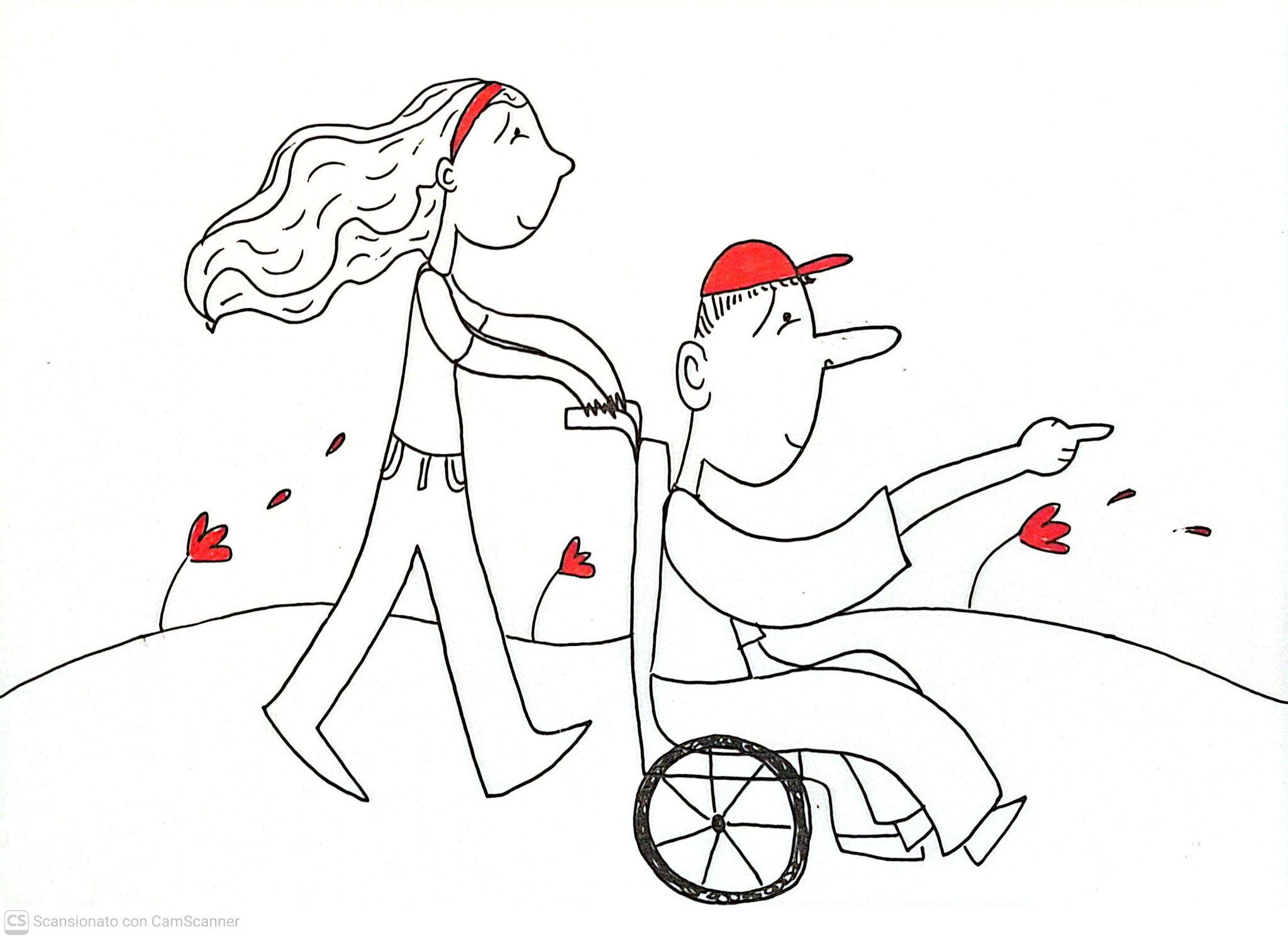
The role of the caregiver is becoming increasingly fundamental in contemporary society due to profound social and demographical changes. The aging population, the increase in chronic disabilities, and the progressive reduction of traditional welfare resources make it increasingly clear that caregiving is an essential, albeit often invisible, component of social sustainability. In this sense, caregiving cannot be considered exclusively a private or family matter, but must be recognized as a structural element that contributes to the overall functioning of society. A society that does not protect caregivers risks creating fragile models of care that are unsustainable in the long term.
It is important to clarify exactly who this figure is. A caregiver supports a person with a disability, ensuring their right to an Independent Life. Article 19 of the United Nations Convention on the Rights of Persons with Disabilities addresses Independent Living and reasonable accommodation. Reasonable accommodation may be physical, like a ramp, or human, such as a workplace assistant supporting job-related tasks.
The caregiver, therefore, falls within the framework of reasonable accommodation for persons with disabilities. Following the paradigm shift introduced by the United Nations Convention (2006), it is the person with a disability who chooses how and with whom to live; accordingly, the caregiver is often chosen directly by the person with a disability.
A caregiver may be a family member or an individual external to the family who supports the person with a disability in their mobility and personal care needs. Statistics indicate that the number of caregivers in Italy is steadily increasing. Journalist Sara De Carli, writing in Superando, reports that “in Italy there are more than 7 million family caregivers, 60% of whom are women, and this number is expected to grow.” In her article, she also highlights that at some point in their lives, many people may experience the role of caregiver1.
Despite this, individuals who perform caregiving work are often not adequately recognised. Their needs are insufficiently acknowledged, which can be highly problematic. Caregivers may feel “loneliness, disorientation, exhaustion, and helplessness,” as noted by Sara De Carli. Yet, these emotional experiences are frequently overlooked or inadequately addressed.
For this reason, the public debate on caregivers in Italy is relatively recent and remains open. This discussion has also been enriched by author Cinzia Tocci, through her book Caregiver, Donors of Care, in which she reflects on her personal experience as a caregiver for her mother. The author draws attention to the role she performed, emphasising its importance in the development of new competences that deserve recognition. As she writes, “the skills developed by caregivers (such as resilience, organisational abilities, emergency management, and empathy) become valuable resources in professional and social contexts as well.”5 In this sense, caregiving can represent an enrichment for society as a whole, fostering new approaches to care and support that finally place the person with a disability at the centre2.
Unfortunately, much like persons with disabilities themselves, caregivers are often marginalised. For this reason, it is essential that the narrative surrounding these figures changes: it should no longer remain confined within the domestic sphere, but instead be recognised at a legislative and national level3.
Currently, in Italy, Law No. 205/2017 has introduced a formal definition of the caregiver role; however, it does not provide adequate protection or support measures for caregivers4. Moreover, only 13 Italian regions have legally recognised this role5, clearly indicating that substantial work remains to be done to meet caregivers’ needs. These include “concrete work–life balance measures, psychological support, access to information, specific training, recognition of competences, and economic interventions such as pension contributions, tax deductions, home-care support, and shared care pathways in which the caregiver is fully involved alongside other professionals in designing the life project of the person receiving care,” as highlighted in the Superando article Family caregivers and sibling figures still invisible and in need of full recognition.
Additionally, this year, the Council of Ministers approved a draft law on family caregivers, developed under the leadership of Minister Alessandra Locatelli for Disabilities. Even prior to its approval, this bill generated significant debate among representative associations and directly affected individuals; further insights are available through the commentary provided by Vincenzo Falabella, President of FISH.
Another issue of particular relevance to persons with disabilities and caregivers alike is the need for psychological support to help them cope with the daily challenges they face. The caregiver role should not be taken for granted, nor should the mental health of those who choose—or find themselves required—to perform this role. Caregivers may experience multiple consequences, including social isolation, employment-related difficulties, and psychological distress6.
Anna Maria Gloria reflects on the urgent need for psychological support for both caregivers and persons with disabilities. Access to such services remains challenging, and while online therapy may represent a viable compromise, the economic barrier cannot be ignored7.
In conclusion, it is clear that the caregiving role is demanding yet profoundly enriching and essential. For this reason, caregivers must receive proper recognition, protection, and training, so that this role can increasingly serve as an effective support for the Independent Living of persons with disabilities.
1 “It is a destiny that awaits us all: to take care of our fathers and mothers when they "become small". https://superando.it/2025/04/15/la-solitudine-dei-caregiver
2 Caregiving, therefore, can be considered a journey, according to Tocci, which, while leaving scars, enriches those who experience it and can become a collective heritage. https://superando.it/2025/10/10/caregiver-donatori-di-attenzioni-una-bussola-di-sopravvivenza-emotiva/
3 And it is precisely here that storytelling also becomes a civic commitment: care cannot remain confined to the home. It needs to be supported as a right and valued as a skill, so that caregivers don't remain invisible. https://superando.it/2025/10/10/caregiver-donatori-di-attenzioni-una-bussola-di-sopravvivenza-emotiva/
4 Law 205/17 represented a first step toward a legal definition of the role, but at present there is nothing in terms of protection, support, and structural measures that can guarantee the role and rights of caregivers.” https://superando.it/2025/07/24/caregiver-familiari-e-sibling-figure-ancora-invisibili-che-richiedono-un-pieno-e-pronto-riconoscimento/
5 Added to this is the fragmented legislation in our country, which exacerbates the situation: currently, in fact, only 13 regions have regulated this role, with Emilia Romagna leading the way with a law passed in 2025. https://superando.it/2025/07/24/caregiver-familiari-e-sibling-figure-ancora-invisibili-che-richiedono-un-pieno-e-pronto-riconoscimento/
6 Furthermore, the consequences for caregivers are severe: psychological disorders, social isolation, work difficulties, worsening family economic conditions, and a tendency to neglect their own health, focusing all their energy on the person they care for, often in total solitude.
https://superando.it/2025/07/24/caregiver-familiari-e-sibling-figure-ancora-invisibili-che-richiedono-un-pieno-e-pronto-riconoscimento
7 Caregivers and people with disabilities are desperately needed to engage in psychological therapy. However, there are various obstacles that limit access to these services. In addition to financial constraints, there are also logistical challenges, which, according to FISH and the Serenis service, could be overcome with online sessions.
https://superando.it/2025/10/24/persone-con-disabilita-e-caregiver-quel-bisogno-profondo-e-urgente-di-supporto-psicologico/
Keywords
How to cite this article
Manuela Viezzoli (2026), "The Importance of the Caregiver’s Role", in Inclusion and Eco-Social Justice, ISSN 3035-5265, https://unipd-centrodirittiumani.it/en/topics/the-importance-of-the-caregivers-role (consulted on 18/10/2026).
